An audit answers one question: was this code safe on the day we signed it? Web3 threat monitoring answers a different and increasingly urgent one: is it safe right now, at this block, as it interacts with the live chain? In 2026, most losses no longer come from a bug the audit missed. They come from what happens to a perfectly good contract after launch, a malicious approval, a compromised key, an oracle being fed a lie, and that is exactly the gap continuous monitoring is built to close.
What is web3 threat monitoring?
Web3 threat monitoring is the practice of continuously watching your smart contracts, wallets and on-chain activity for signs of an attack in progress, and reacting before funds leave. Think of it as antivirus for on-chain systems: instead of a one-time inspection, it is an always-on layer that observes every transaction touching your protocol and flags, or stops, the ones that look like an exploit, a drainer approval, a phishing-driven transfer or an anomalous flow.
Why an audit alone is no longer enough
A smart contract audit is essential, and Vibranium's whole reputation is built on senior-led, line-by-line reviews. But an audit is a snapshot. It certifies the code as reviewed at a moment in time. It cannot see the token approval a treasury signer is phished into granting six weeks later, the governance key that gets compromised, or the oracle that gets manipulated during a thin-liquidity window. Those events happen live, on-chain, long after the report is delivered, which is why monitoring starts where your audit ends.
How real-time smart contract monitoring works
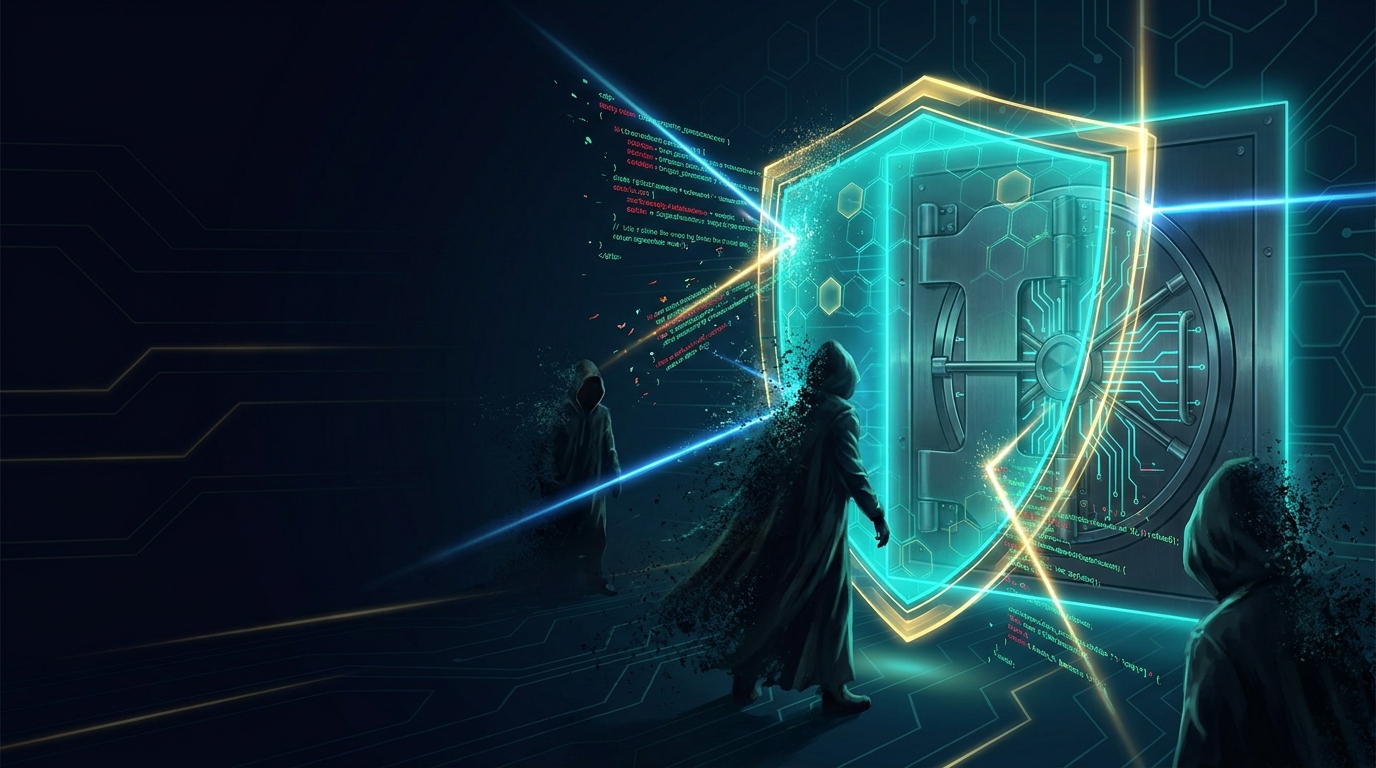
Effective monitoring watches the mempool and confirmed state for known exploit signatures and for behaviour that simply does not fit your protocol's normal pattern. When it sees an attack forming, the decisive factor is speed: most DeFi exploits clear in seconds, so a response measured in hours is no response at all. The strongest systems can automatically pause a contract or flag a transaction in under a couple of seconds, buying the window a human team needs to intervene, and they do it read-only and agentless, so the monitor itself never becomes a new attack surface.
Introducing R.I.T.A. — real-time monitoring from Vibranium
R.I.T.A. is Vibranium's AI-powered Web3 firewall and 24/7 monitoring layer. It watches your contracts and wallets around the clock, detects on-chain exploits, scams, malware, phishing and anomalous flows, and auto-pauses in under roughly two seconds, before the transaction that would drain you ever clears. It is read-only and agentless, and it routes alerts straight to your Slack, Telegram, Discord, PagerDuty or email. The idea is simple: the audit hardens your code, R.I.T.A. guards it in production.
Start with a free scan
You can see the value in about thirty seconds. R.I.T.A.'s free scan takes any wallet or contract address and returns an instant on-chain risk profile, open approvals, drainer exposure and risky counterparties included. It is the fastest way to find out whether something you own is already exposed. For teams that want the always-on layer, founding access is available now: a $99 deposit locks R.I.T.A. at $129/month for life before the public price.
Frequently asked questions
Is web3 threat monitoring a replacement for a smart contract audit?
No. They cover different risks. An audit finds flaws in the code before launch; monitoring detects attacks against the live system afterwards. You want both, an audit to harden the code and monitoring to guard it in production.
How fast can real-time monitoring stop an attack?
Speed is everything, because exploits clear in seconds. R.I.T.A. is designed to detect and auto-pause in under roughly two seconds, ahead of the draining transaction.
Does monitoring add a security risk of its own?
It should not. R.I.T.A. is read-only and agentless, so it observes and alerts without holding keys or write access, meaning the monitor itself is not a new attack surface.
If your protocol is live and holding value, the question is not whether it was audited, it is who is watching it right now. See R.I.T.A. and run a free scan. Or request a senior-led audit to harden the code first.